
Four Exercises That May Help Reduce Leg Swelling and Why Movement Matters for Your Veins
If your legs are swollen by the end of the day, you have probably tried the obvious things.
Elevating your feet on the couch. Drinking more water. Cutting back on salt. And all of those
can help in the short term. But if the swelling keeps coming back, day after day, something
deeper is usually going on, and managing it requires more than rest and ice packs.
Leg swelling is one of the most common signs of chronic venous insufficiency, a condition
where the valves in your leg veins are not pushing blood back up to the heart efficiently. When
those valves weaken, blood pools in the lower legs, pressure builds, and fluid leaks into the
surrounding tissue. The result is that heavy, tight feeling you notice by mid-afternoon, and the
sock lines that take longer to fade than they used to.
What many people do not realize is that the same circulatory mechanics that drive venous
swelling also overlap significantly with the lymphatic system. Your lymphatic vessels run
alongside your veins and are responsible for draining excess fluid from the tissues. When
venous pressure is elevated, the lymphatic system has to work harder to compensate. Over
time, that system can become overloaded, leading to a type of swelling that is partly venous
and partly lymphatic. This is why leg swelling from vein disease and leg swelling from lymphatic
insufficiency often look and feel very similar, and why the exercises that help one tend to help
the other.
None of these exercises replaces medical evaluation or treatment. If your legs are swelling
regularly, that is worth investigating with a vein specialist. But as a complement to professional
care, or as a way to support your circulation between treatments, the right kind of movement
can make a meaningful difference in how your legs feel day to day.
Why Exercise Matters for Leg Swelling
Your leg veins do not have a pump of their own. Unlike arteries, which are powered by the
heart, veins rely on a secondary system to move blood upward against gravity. That system is
your calf muscles. Every time you contract and release the muscles in your lower legs, they
squeeze the veins and push blood toward the heart. This is sometimes called the calf muscle
pump, and it is the single most important mechanical driver of venous return in the legs.
When you sit or stand for long periods without moving, that pump goes quiet. Blood pools.
Pressure builds. Fluid accumulates.
The swelling you notice at the end of a sedentary day is not
caused by what you ate or how much water you drank. It is caused by a circulatory system that
did not get the movement it needed to do its job.
The same principle applies to the lymphatic system. Lymphatic vessels do not have a central
pump either. They depend on muscle contraction, joint movement, and changes in pressure
within the body to push lymph fluid through the system. Exercise activates both the venous and
lymphatic return pathways simultaneously. This is why movement is the single most effective
non-medical intervention for reducing leg swelling, regardless of whether the underlying cause
is venous, lymphatic, or a combination of both.
Not all exercise is equally helpful for this purpose. High-impact activity can actually increase
swelling in some patients. The four options below are specifically suited to people dealing with
chronic leg swelling because they activate the calf muscle pump and support lymphatic
drainage without placing excessive strain on already compromised veins.
Swimming and Water-Based Exercise
Swimming is one of the most effective exercises for leg swelling, and there is a reason it is
recommended so consistently by vascular and lymphatic specialists. Water provides something
no land-based exercise can: hydrostatic pressure. When you are immersed in water, the
pressure of the water itself compresses the tissues in your legs gently and evenly from all sides.
This external compression helps push fluid out of the tissues and back into the venous and
lymphatic vessels, acting like a full-leg compression garment that you do not have to put on.
At the same time, swimming and water aerobics engage the calf muscles rhythmically and
continuously. The kicking motion in particular activates the calf pump repeatedly without the
jarring impact of running or jumping on hard ground. And because water supports your body
weight, there is no gravitational load on the leg veins, which means you get the circulatory
benefit of movement without the downward pressure that makes swelling worse on land.
For patients with combined venous and lymphatic swelling, water exercise is especially
valuable. The hydrostatic pressure assists lymphatic drainage in a way that is very difficult to
replicate on land, and the reduced gravity environment allows patients who may have difficulty
walking comfortably to move freely and activate the muscles they need to engage.
Even 20 to 30 minutes of gentle swimming or water walking two to three times a week can
make a noticeable difference in how your legs feel at the end of the day.
Walking
Walking is the most accessible exercise for leg swelling and the one that most directly activates
the calf muscle pump. Every step you take contracts and releases the calf muscles in exactly the
sequence your veins need to push blood upward. It is the movement your circulatory system
was designed around.
The key is consistency and duration rather than speed or intensity. A brisk 30-minute walk on
flat ground is significantly more beneficial for venous return than a short, intense burst of
exercise followed by hours of sitting. The goal is sustained, rhythmic calf engagement over a
period long enough to meaningfully reduce the fluid that has accumulated in the lower legs.
For patients with venous insufficiency, walking in compression stockings amplifies the benefit.
The compression supports the vein walls externally while the calf muscles pump blood from the
inside. Together, they create a much more efficient return circuit than either one alone.
One thing to be aware of: walking on hard surfaces like concrete for extended periods can
increase discomfort in patients with significant varicose veins. Softer surfaces like grass, a track,
or a treadmill are generally easier on the legs. If outdoor walking is your preference, supportive
footwear with adequate cushioning makes a real difference.
Even patients who are unable to walk for 30 continuous minutes will benefit from shorter,
frequent walks throughout the day. Ten minutes every few hours is more effective for
managing swelling than one long walk followed by a full day of sitting.
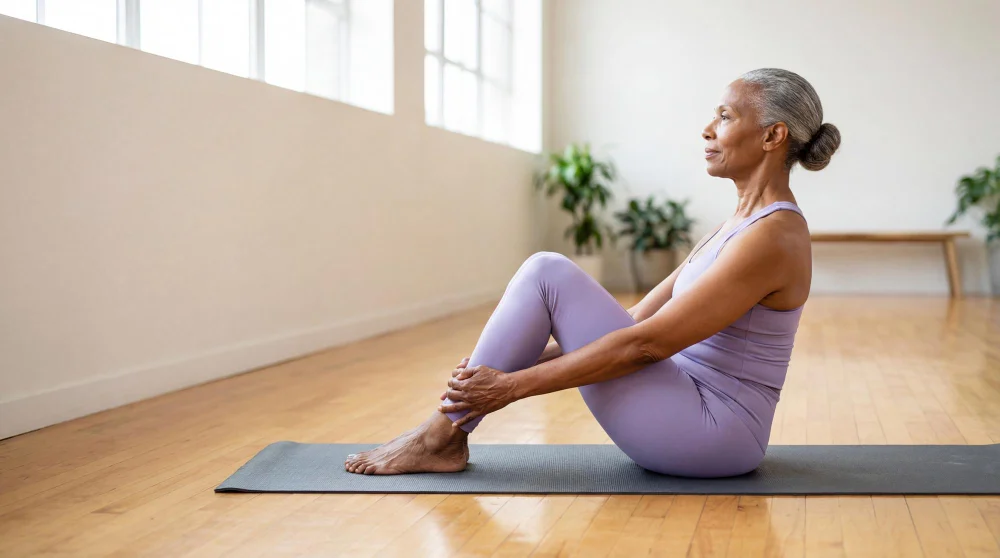
Yoga
Yoga offers something that most other exercises do not: inversions and position changes that
use gravity to assist venous and lymphatic drainage rather than fight against it. Poses that
elevate the legs above the heart, such as Legs Up the Wall or Supported Shoulderstand, allow
blood and lymph fluid to drain passively from the lower extremities. For patients with chronic
leg swelling, even five minutes in an inverted position can produce noticeable relief.
Beyond inversions, yoga involves slow, controlled muscle engagement combined with deep
breathing. The breathing component is particularly relevant for the lymphatic system. The
diaphragm acts as a secondary pump for lymphatic fluid in the abdomen and thorax. Deep
diaphragmatic breathing during yoga practice creates pressure changes in the torso that help
draw lymph fluid upward from the legs, a mechanism that does not get activated during most
conventional exercise.
The standing poses in yoga, Warrior sequences, Tree Pose, and Chair Pose also activate the calf and
thigh muscles in sustained holds rather than rapid contractions. This type of engagement is
effective at promoting venous return while simultaneously building the muscular endurance
that keeps the calf pump working efficiently throughout the day.
For patients who are new to yoga or have limited mobility, a chair-based or gentle yoga class is
a good starting point. The goal is not flexibility or athletic performance. It is activating the
muscles and positions that support fluid drainage from the legs.
Vibration Plate and Mini Trampoline
Vibration plates and mini trampolines, sometimes called rebounders, are two of the more
underappreciated tools for managing leg swelling, particularly for patients who have difficulty
with sustained walking or those who need a low-impact option, they can use at home.
A vibration plate works by transmitting rapid, low-amplitude vibrations through the feet and
into the legs. These vibrations cause involuntary muscle contractions throughout the lower
limbs, activating the calf pump without requiring the user to walk, run, or consciously exercise.
For patients with lymphedema or chronic venous insufficiency who find it difficult to stay
active, standing on a vibration plate for 10 to 15 minutes can produce a measurable
improvement in fluid movement. Research has shown that whole-body vibration therapy can
improve both venous return and lymphatic drainage, making it a useful adjunct for patients
managing swelling from either or both causes.
Mini trampolines work through a different but equally effective mechanism. The gentle
bouncing motion creates rhythmic changes in gravitational force on the body. At the top of
each bounce, there is a brief moment of reduced gravity. At the bottom, there is a brief
increase. This oscillation acts as a pump for both the venous and lymphatic systems,
encouraging fluid to move upward with each cycle. The bouncing also engages the calf muscles
and activates the one-way valves in the leg veins repeatedly, which is exactly the stimulus those
valves need to function at their best.
Both options are gentle enough for most patients with chronic swelling and can be done at
home in short sessions. Even five to ten minutes daily can contribute meaningfully to swelling
management when combined with other supportive measures.
A Note on What Exercise Can and Cannot Do
Exercise supports your circulation. It activates the calf muscle pump, assists lymphatic drainage,
and can meaningfully reduce the day-to-day swelling that comes with venous or lymphatic
insufficiency. For many patients, consistent movement is the single most important lifestyle
change they can make for their leg health.
But exercise does not repair damaged vein valves. If the underlying cause of your swelling is
chronic venous insufficiency, the valves that are allowing blood to pool in your legs will not
improve on their own, regardless of how much you walk, swim, or stretch. Exercise manages
the symptoms. Treatment addresses the cause.
If your legs are swelling regularly, if they feel heavy and tired by the afternoon, if you are
noticing skin changes around your ankles, those signs are worth discussing with a vein
specialist. A diagnostic vascular ultrasound can determine whether your swelling has a venous
treatable component, and if it does, the treatment options today are minimally invasive,
performed in-office and require no downtime.
Getting Evaluated in Sugar Land
Dr. Tonie Reincke is a Vascular and Interventional Radiologist with over 30 years of medical
experience, specializing in the diagnosis and minimally invasive treatment of vein disease at
Reincke Vein Center in Sugar Land, TX. Every new patient receives a thorough consultation and,
where needed, a diagnostic vascular ultrasound to identify the root cause of their symptoms.
If your leg swelling has not responded to elevation, compression, or lifestyle changes and you
want to understand whether a venous condition is driving it, scheduling an evaluation is a
straightforward next step. Most major insurance plans are accepted, including Medicare.
Schedule your appointment with Dr. Reincke here, or call 281-394-4446.
This information is for educational purposes and is not a medical diagnosis. A consultation with
Dr. Reincke will confirm your treatment options. Individual results may vary.
The Vein Health Journal
A resource for understanding your symptoms, exploring treatments, and prioritizing your long-term leg health.